
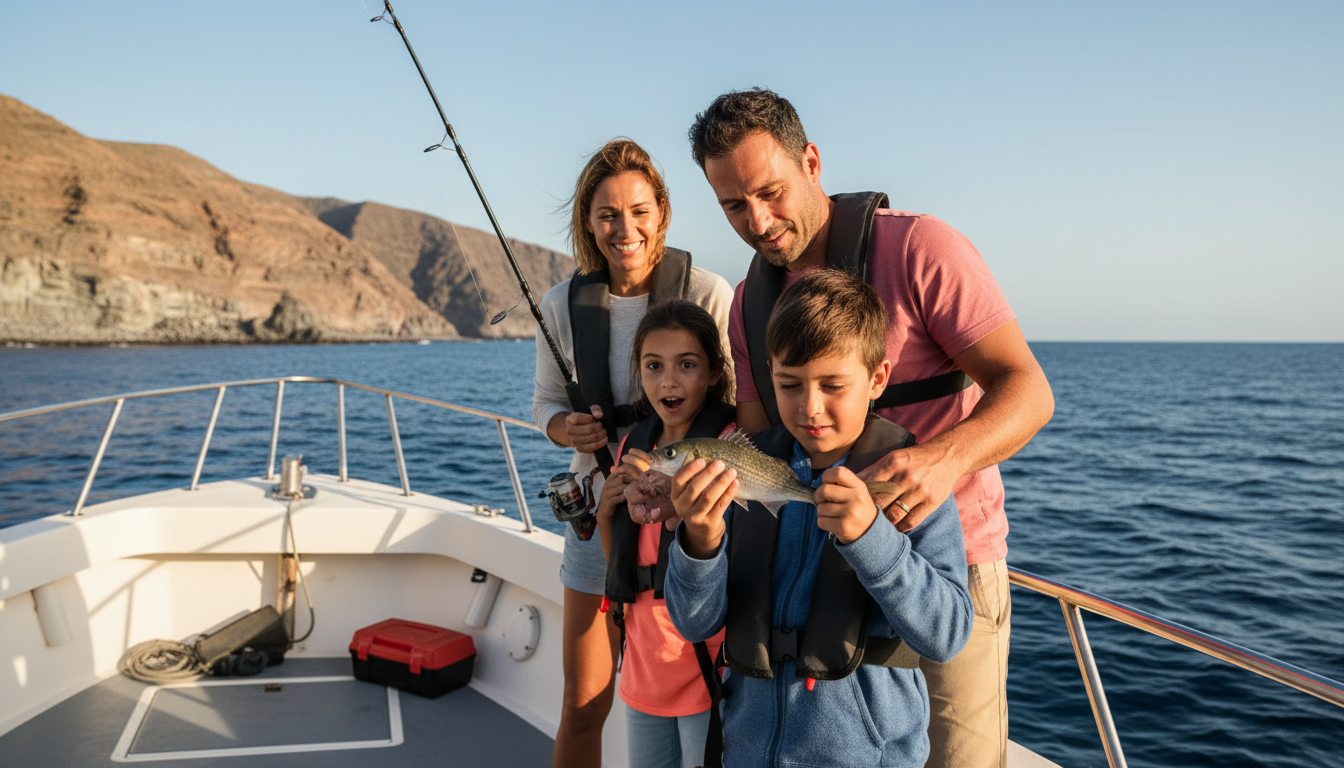
If you're reading this, you're probably looking for more than just "a day trip." You're looking for a family outing that's different, that gets the kids away from their screens, that brings you closer together... and, if it goes well, that ends with that phrase that gets repeated forever: "Do you remember your first fishing trip?"
In Gran Canaria, that first catch is very possible. And not just because of the fishing itself, but because of the whole package: pleasant climate, relatively predictable sea conditions, short trips, areas close to port, and a seafaring culture that makes everything feel natural.
In this post I'll tell you, in a friendly and clear way, why Gran Canaria is one of the best islands for a first fishing experience with children, what to expect, and how to make it a safe and fun day.
Purpose of the post (so that you find exactly what you're looking for)
- If you want to know if it's safe: here's how it's done.
- If you have no experience: even better, because we're presenting it as a real "first time".
- If you want a quality plan: also, because it's not about going "to see what happens", but about doing it right.
1) Gran Canaria makes it easy: good weather and outings almost all year round
One of the reasons so many families return here is simple: Gran Canaria has a great climate. That means fewer cancellations, fewer last-minute changes, and a greater chance of a perfect day.
For a family fishing trip, this is noticeable in:
- More comfortable journeys (less "scary" if someone is sensitive to movement).
- More scheduling options (morning or afternoon, depending on age and routines).
- A more enjoyable experience: sun, light, sea and quality time.
Fishing with kids doesn't need to be "epic". It needs to be an easy day.

2) Fishing areas near the coast: less time sailing, more time enjoying
When it's your first time, ideally the experience should be progressive: leave the port, feel the sea, see how the equipment is prepared, try it out... and start.
In Gran Canaria, many family outings can be planned with relatively close areas, which allows:
- Less browsing time (ideal for young children).
- More room to stop, rest, or change plans.
- More sense of control for parents.
And this is key: in a family outing, success isn't just about "fishing." It's about everyone having a good time.
3) A first “realistic” (and exciting) capture: ideal for hooking them
The first time has to be a victory. And Gran Canaria helps because there are fishing options that, if planned well, offer good chances of success.
The beauty of a first catch isn't the size: it's the moment. The silence. The tension on the line. The look of surprise. The "It's heavy, it's heavy!" even if it's a modest fish.
If you do it with a crew that knows how to work with families, you'll be looking for:
- A suitable species for beginners (depending on the season).
- A simple assembly.
- Relaxed pace, no stress.
- Short and clear explanations for children.
4) It is an activity that teaches (without seeming like "a lesson")
There are family plans that are entertaining. And there are plans that, in addition, leave something behind.
Fishing, properly understood, teaches:
- Patience (no screens, no rush).
- Respect for the sea (and for animals).
- Teamwork (everyone does something).
- Responsibility (take care of the equipment, listen to instructions).
And, above all, it teaches a very beautiful thing: that real memories are not bought, they are lived.
5) Safety and comfort: what matters most when you're traveling with children
This is the point that worries me the most (and rightly so). And here I'm speaking as a parent who wants to go home thinking: “We're so glad we came.”
On a well-organized family fishing trip, the following is taken care of:
- Life jackets that fit properly..
- Simple briefing before leaving: where to sit, what not to touch, how to move.
- Shades / rest areas (depending on the vessel).
- Water and pauses: the sea is more tiring than it seems.
- Family pace: it's not a competition.
If your child gets carsick easily, the best thing to do is usually:
- Choose times when the sea is calmer.
- Eat a light meal before going out.
- Bring sunscreen, a hat, and comfortable clothing.
- Please give advance notice to adjust the departure.
6) “What if we don’t catch any fish?” Spoiler: It still turns out perfectly fine
Let me tell you straight: sometimes the sea doesn't make it easy. But a family outing isn't measured solely by catches.
If you do it right, the day is worthwhile because:
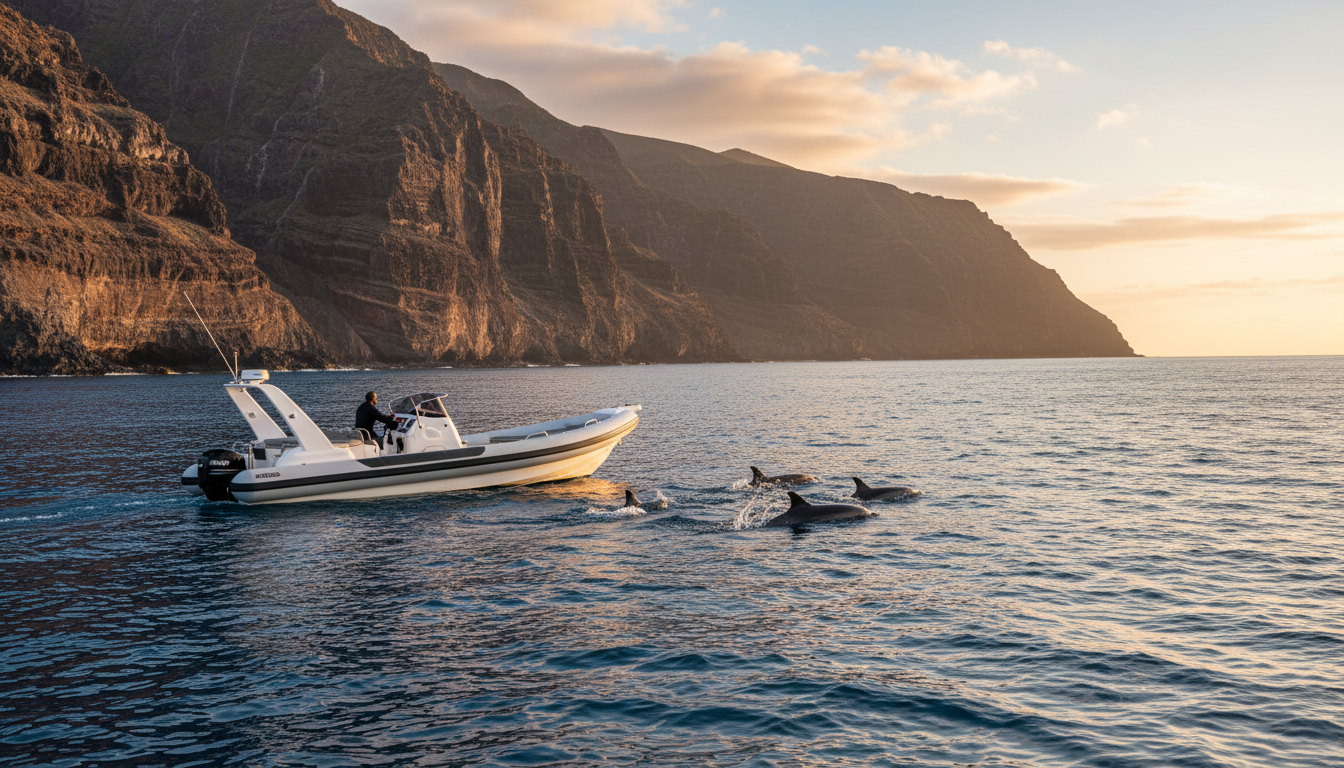
- See dolphins (it happens more than you think).
- Learn how a ship works.
- Being together without interruptions.
- Take a bath (if the plan allows it).
- Taking photos that will later become "the photos".
Fishing is the common thread. Memory is the whole.
7) What to pack for a family fishing trip (quick list)
So you can go with peace of mind:
- High sun protection (and reapply)
- Caps/hats
- Sunglasses
- Light clothing + a thin layer (it gets chilly at sea)
- Comfortable shoes with good soles (or go barefoot if allowed and safe)
- Water and a snack
- Towel and swimsuit (if there is a rest stop for swimming)
- Mobile phone bag / waterproof case
- If there is a tendency towards motion sickness: consult a doctor and prepare accordingly.
8) The best duration for children (according to age)
A practical recommendation to increase “family success”:
- Young children (approx. 4–7 years): shorter and more flexible outings.
- Children (approx. 8–12 years): already enjoy the whole process more.
- Teenagers: can experience it as a "real" adventure (and get very hooked).
The key is to adapt the plan to the family, not the other way around.
Frequently Asked Questions from Parents (Clear Answers)
Do you need experience to go fishing with children?
No. In fact, many families enjoy it more when the crew presents it as an introduction.
Is it dangerous?
In a professional service, safety is the priority: appropriate life jackets, clear rules, and constant supervision. Even so, it's worth saying: the sea always demands respect.
What about the capture?
It depends on the approach: sometimes it's allowed, sometimes it can be kept. Ideally, you should check beforehand and follow local regulations and the captain's judgment.
A memory that accompanies them (and you too)
Some gifts are forgotten. But a first catch—with its excitement, its story, its "I caught it"—stays with you forever. And doing it in Gran Canaria has that rare mix of ease and magic: good weather, sea, light, and an experience that feels authentic.